

You need not worry about the vampire camel.
Firstly, it has been approximately 12 million years since this toothy creature inhabited the plains of what we now refer to as North America.
Additionally, despite its two pairs of fang-like teeth and fearsome moniker, it was likely a herbivore that feasted on leaves, not a blood-draining monster.
“Unless you provoked it, it wouldn’t pose any threat,” stated paleontologist Donald Prothero in an interview with As It Happens host Nil Kӧksal. “We simply thought it deserved an intriguing name.”

Donald Prothero, a paleontologist at California State Polytechnic University, Pomona, discusses Vampyrocamelus, a.k.a. the vampire camel, with As It Happens host Nil Kӧksal.
Vampyrocamelus is one of five newly identified species featured in an extensive monograph about the evolution of North American camels, published in the New Mexico Museum of Natural History and Science Bulletins.
Researchers assert that this discovery provides valuable insights into life during the Clarendonian epoch, a time when immense predators and herds of grazing mammals inhabited the savannah-like grasslands of present-day North America.
What purpose do those teeth serve?
The vampire camel existed between 12 and 13 million years ago in what is now the states of Texas, Oklahoma, and Nebraska.
Only the male individuals possessed the large, curved fangs that inspired its name.
However, the molars discovered in Vampyrocamelus fossils indicate that it was an herbivore, similar to all camels, despite its sharp front teeth.
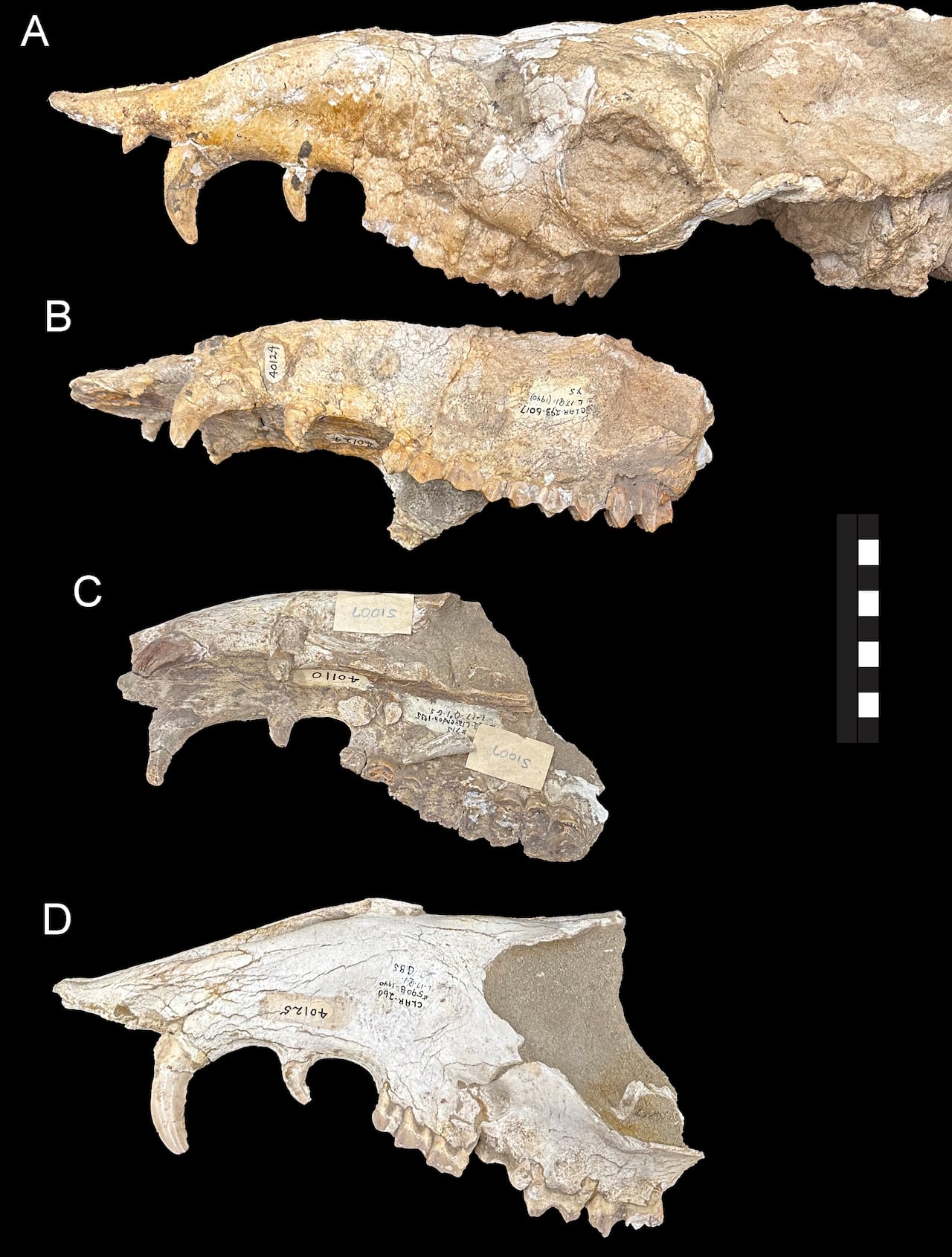
Fossils of Vampyrocamelus display two sets of curved canines. (Donald Prothero)
So if those teeth weren’t designed for tearing into the flesh of unsuspecting victims, what was their function?
“Male camels utilize their teeth to engage in combat with one another, biting until one prevails and earns the right to father the next generation,” Prothero, who serves as an adjunct professor at California State Polytechnic University, Pomona, explained.
In fact, Prothero notes that male camels generally have larger canines compared to females. However, in contemporary species, these teeth are more conical and less pronounced.
“Male camels of today fight amongst themselves using these teeth,” Prothero remarked. “I’ve been informed that one common tactic in their fights is to bite each other’s testicles.”
Camels in North America?
The camels we see today inhabit the deserts of Africa and Asia, as well as the mountains of South America, but this was not always the case.
Prothero explains that camels first emerged in North America approximately 46 million years ago. Since 1982, he has dedicated himself to cataloging every camel species found on the continent.
To achieve this, he and his team, including students, have been examining fossils from the Frick collection, which contains about 200,000 specimens housed across seven floors at the American Museum of Natural History (AMNH) in New York.
Prothero mentions that there is a dedicated floor for camels, featuring around 20,000 specimens.
“It mostly consists of numerous drawers filled with skulls, jaws, and limb bones,” Prothero explained. “Some of these specimens have been in the collection for over a century without being properly studied.”
-
Meet the ‘hell chicken,’ a feisty little dinosaur who feasted on fruit
-
Newly discovered ancient apex predator had knife-sharp teeth and bone-crushing jaws
This collection was initially owned by millionaire Childs Frick.
Until Frick’s passing in 1965, his collection was inaccessible to scientists outside his employment. It took another ten years before the collection was relocated to New York and opened to researchers.
Prothero and his team meticulously examined that collection and identified 80 species of North American camels across 40 genera, including five species that are newly classified, such as a long-snouted camel named Longirostrotylopus holroydae.
Additionally, the researchers discarded 130 previously recognized species that are no longer deemed valid based on new evolutionary insights.
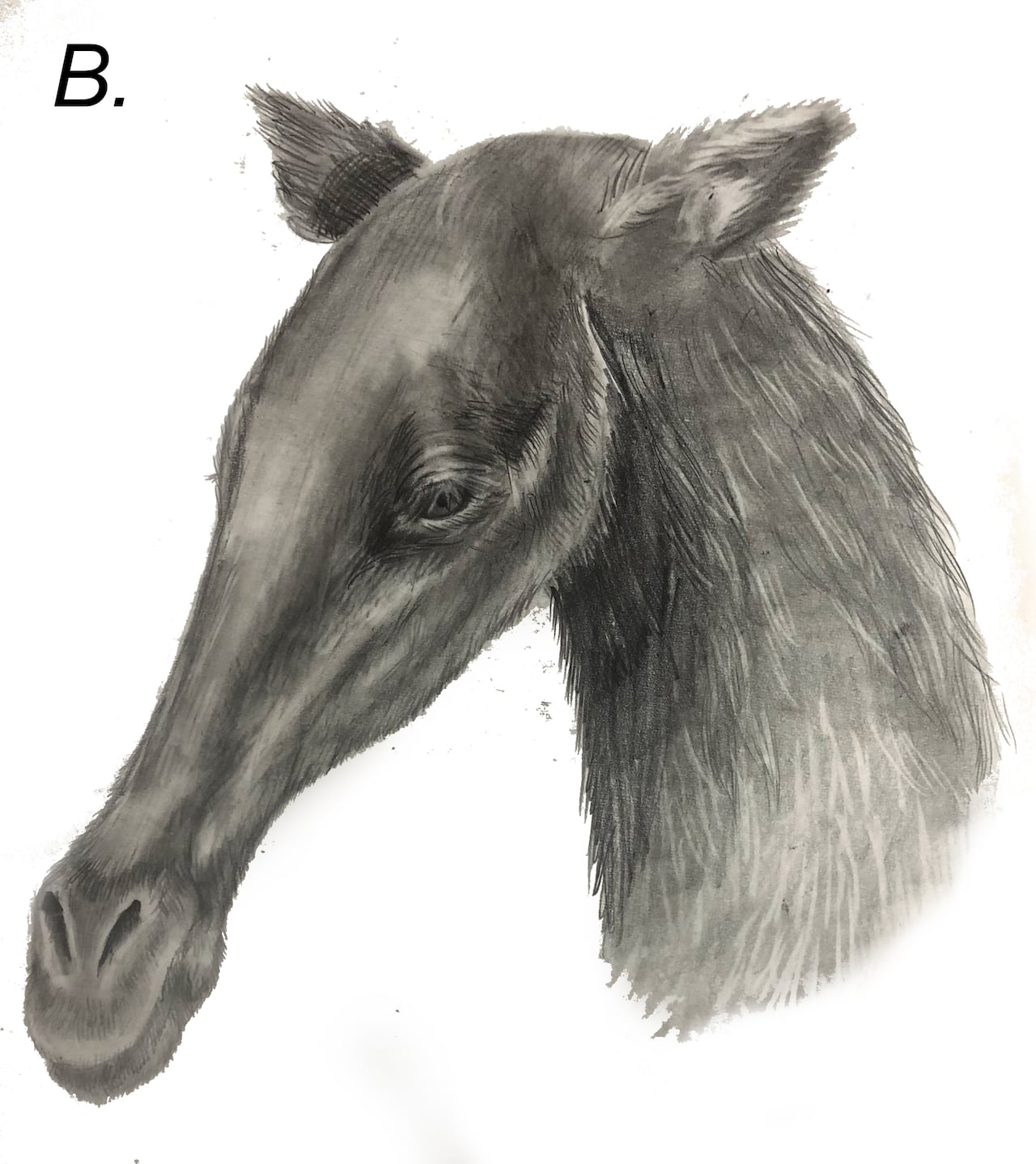
Longirostrotylopus holroydae is a newly identified genus and species of long-snouted camel from the John Day Fossil Beds of Oregon. (Submitted by Donald Prothero)
Danielle Fraser, a paleobiologist at the Canadian Museum of Nature, expressed her support for the new taxonomy, including the vampire camel.
“Without understanding the number of species that existed, we might overlook significant evolutionary trends,” Fraser, who did not participate in the research, stated in an email.
“This monograph could enhance fossil databases utilized by many scientists to comprehend the evolution of mammalian faunas over time.”