

A monarch butterfly hailing from Manitoulin Island, Ontario, has gained local fame after successfully completing a remarkable migration across North America, culminating in Mexico this month.
This stunning insect traveled over 3,300 kilometers in just 70 days, accomplishing a journey that scientists once deemed impossible: crossing two Great Lakes.
The butterfly, a young female known as MAN26021, was one of many tagged by researchers from Environment and Climate Change Canada and the Canadian Wildlife Federation in late August on Manitoulin Island.
This initiative aimed to study the migratory behaviors and flight patterns of these butterflies.
Equipped with tags affixed to their thorax, these butterflies transmitted data via solar-powered radio devices.
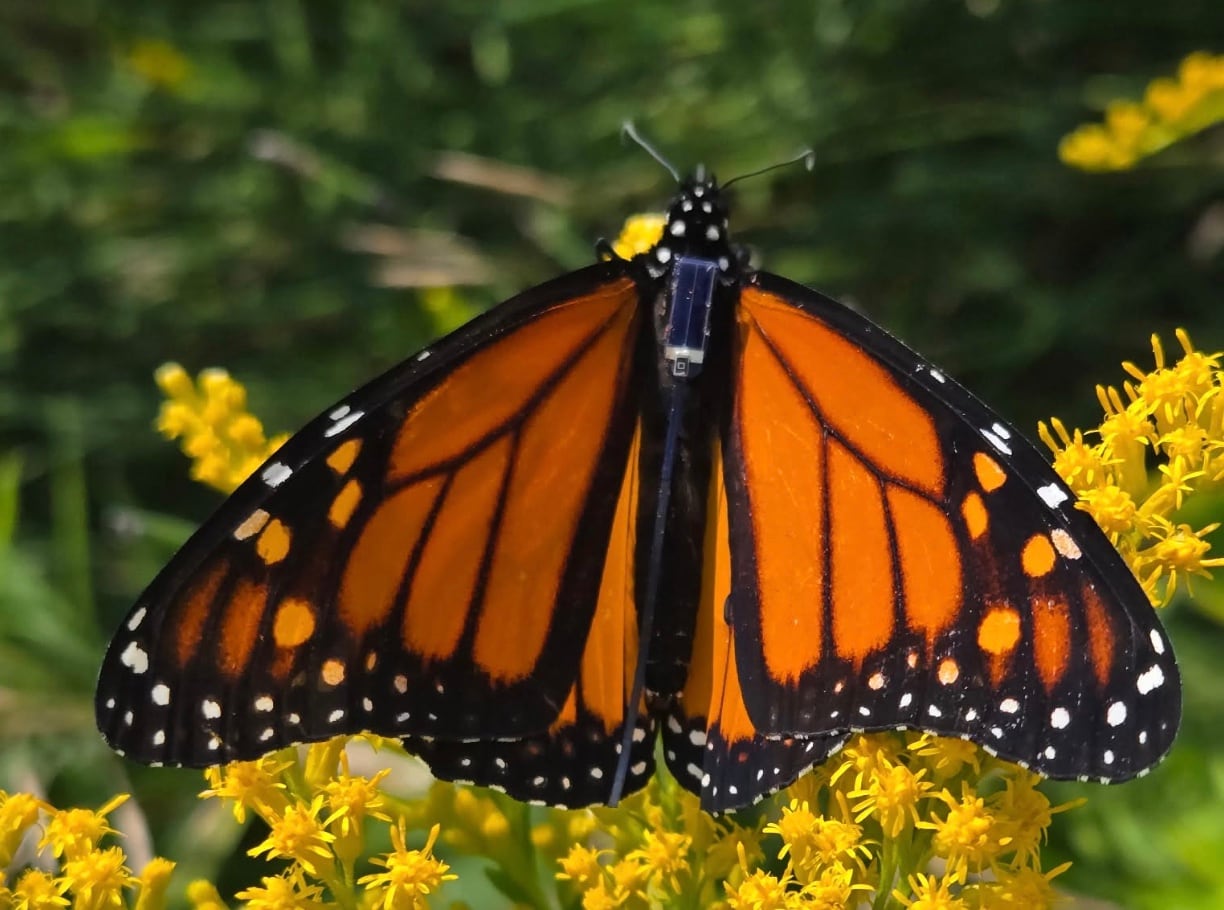
A monarch butterfly tagged with a solar-powered radio transmitter, a tiny device weighing less than a grain of rice. (Manitoulin Nature Club)
Joe Shorthouse, a retired entomologist from Laurentian University and an experienced butterfly researcher, mentioned that he and his team tracked MAN26021 using the Project Monarch app.
This young monarch—about the weight of a paper clip—navigated across Lake Huron and Lake Michigan before making its way across the United States to the Reserva de la Biosfera Mariposa Monarca, an overwintering site located approximately 100 kilometers northwest of Mexico City.
Shorthouse described this journey as a remarkable success in the realm of nature.
“For the first time in history, we confirmed that they can fly across the Great Lakes,” he stated. “This revelation has surprised everyone.”
-
What on Earth
Eddie’s dead: What one monarch’s ill-fated journey can teach us about migration patterns
-
1st of 29 monarch butterflies tagged on Canadian Prairies reaches Mexico after perilous migration
During its 10-week journey, the butterfly managed to evade hazards that typically endanger monarchs — such as vehicles and adverse weather conditions — Shorthouse pointed out.
When considering the additional challenge of flying over two Great Lakes, the improbability of this accomplishment becomes even more astonishing, he remarked.
“This represents one of the world’s most enigmatic and intricate narratives that we still do not fully comprehend. How can it travel such distances, and how do they navigate to their destination?”
The Manitoulin Nature Club, which has been active on the island for 47 years, expressed pride in being the starting point for this butterfly’s extensive journey.
Phyllis Cacciotti, the club’s president, emphasized that this achievement highlights the incredible power of nature, even in its smallest forms.
“It’s truly inspiring. They are warriors,” she remarked.
“We are very fortunate here on Manitoulin Island as we possess rich biodiversity, and it is crucial that we protect and preserve it for the generations to come.”
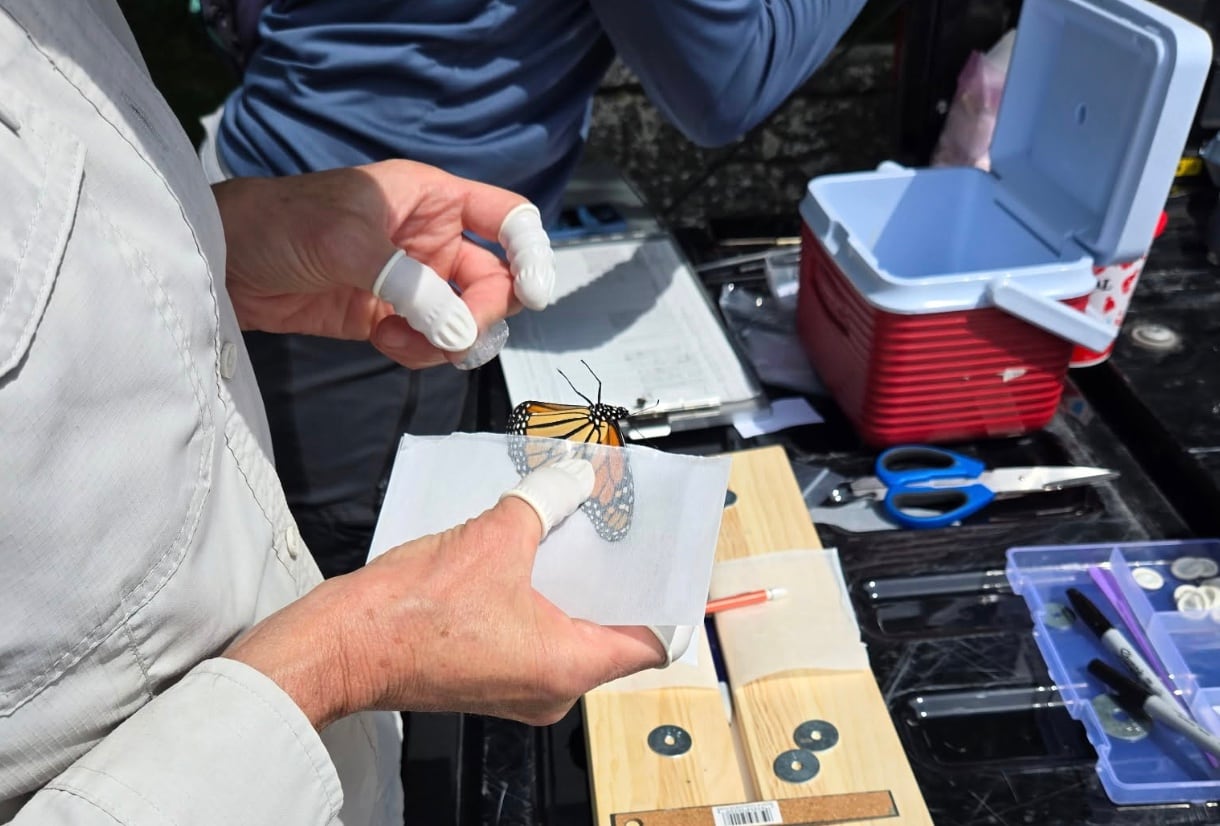
Monarch butterflies were measured and tagged on Manitoulin Island over the summer before journeying towards Mexico for the winter. (Manitoulin Nature Club)
The Manitoulin butterfly is now among thousands that have settled for the winter in the oyamel fir trees in the mountains of Mexico.
Shorthouse expressed hope that this remarkable butterfly will mate in the spring and migrate as far north as Texas, where she will lay her eggs and subsequently pass away.
Yet, her legacy will continue.
The offspring of this butterfly will embark on a journey north, possibly reaching the northern U.S. states, before cycling through the same migration.
“It will be the grandchildren of MAN26021 that we will witness on the shores of Manitoulin Island in May of 2027.”