

As Kyiv grappled on Tuesday with yet another night of lethal attacks involving ballistic missiles and drones, Russian state media chose not to cover the destruction of high-rise buildings or the burning vehicles.
Instead, Russian outlets reported successful strikes on various military installations in Ukraine, while claiming that over 380 Ukrainian drones had been intercepted by the country’s air defenses.
However, it has become increasingly difficult for Russia to hide its own vulnerabilities.
Local officials stated that two civilians lost their lives in Russia due to the overnight assaults. Additionally, there are media reports suggesting that Moscow intends to permit postal workers to equip themselves with anti-drone weapons.
These actions further indicate how Ukraine’s increasing drone efforts are penetrating deeper into Russian territory and affecting the daily lives of ordinary citizens.
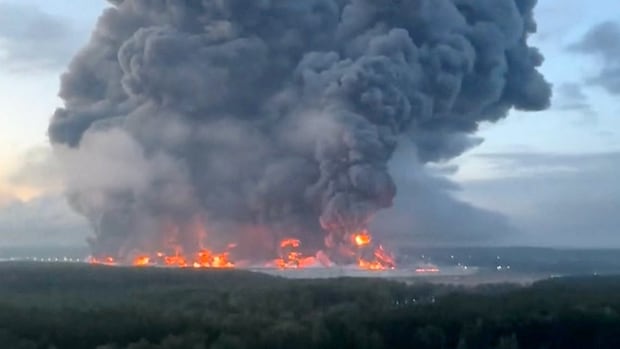
A summer filled with attacks
For almost five years, the Kremlin has made efforts to shield much of its population from the harsh truths of its all-out war against Ukraine and the resulting economic fallout.
However, Ukrainian drone assaults on refineries, energy facilities, and e-commerce warehouses this summer have served as a stark reminder that Russia is not invulnerable.
“Following the recent active drone strikes on Russia — particularly in Moscow and the surrounding region — fear has significantly increased,” said Tatiana, 66, who requested to be identified by her first name only. “We were driving to the dacha with the children and witnessed a massive plume of smoke. Naturally, that instills fear.”
-
Russia reports extensive Ukrainian drone attack across 12 regions
-
Ukraine strikes Moscow oil refinery again, part of a massive drone wave within Russia
Tatiana, like many others interviewed for this story, communicated via voice messages on a messaging application. None wanted to provide their last names due to concerns about potential repercussions for speaking to foreign media regarding the conflict.
She mentioned that she sometimes tells her grandchildren that the noise at night is due to construction work when they wake up, as she wants to shield them from fear.
At her dacha, a countryside residence, she noted that people discuss the anxiety caused by the sound of drones overhead.
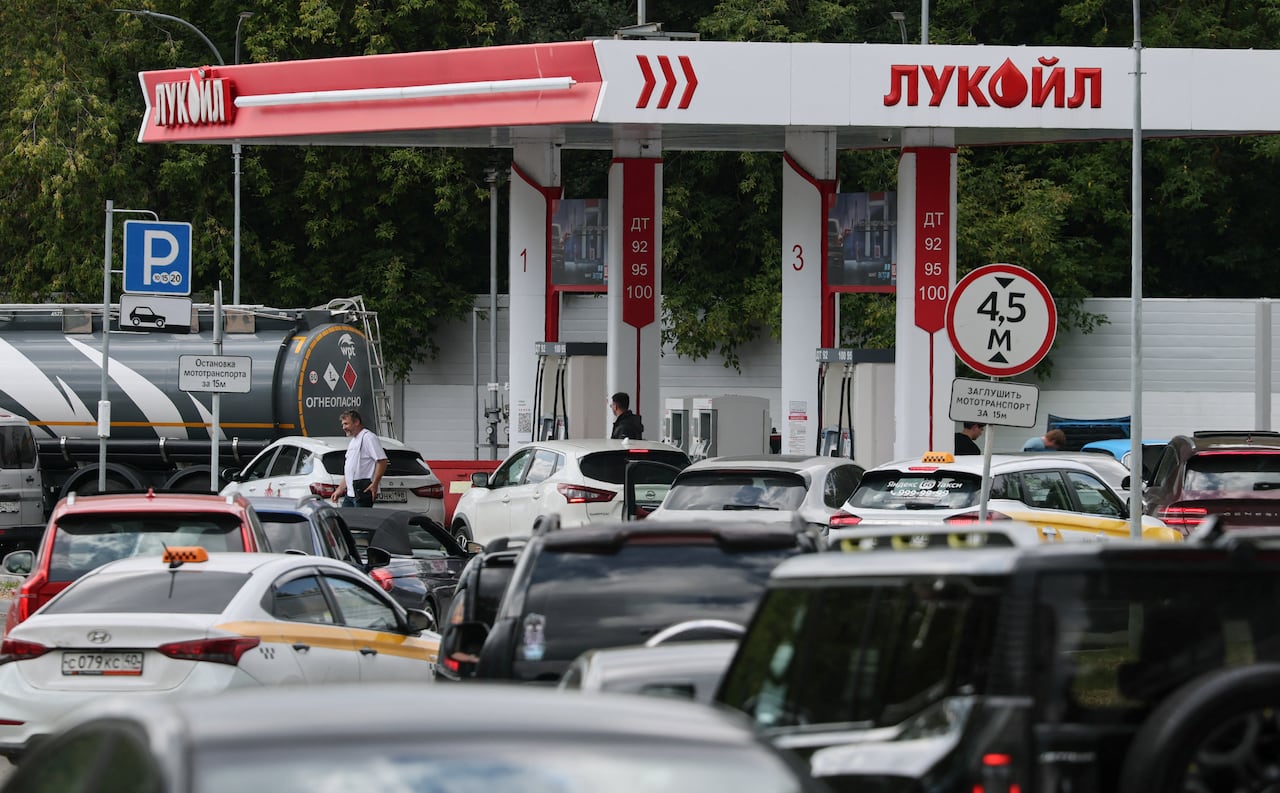
Vehicles queue for fuel at a Lukoil gas station in Moscow on Aug. 17, amid fuel shortages following Ukrainian air strikes on oil refineries in Russia and reductions in gasoline production. (Anastasia Barashkova/Reuters)
Ukrainian strikes on refineries and energy facilities have led to fuel shortages in Russia, resulting in long lines at gas stations, fuel rationing, and public discontent. Social media videos have depicted altercations and disputes erupting at various stations.
The government has implemented measures to stabilize supplies, including importing fuel from nations like India. This is a notable action considering Russia’s status as one of the globe’s largest oil exporters.
The shortage has also fueled the popularity of GdeBENZ (Where is the Benzine), an application that helps drivers locate gas stations with available fuel.
Assessing public sentiment
Denis Volkov, the head of the Moscow-based research and polling organization Levada Center, indicated that as the fuel crisis deepened earlier in the summer, surveys revealed heightened anxiety and a drop in approval ratings for the Russian government.
However, he noted that the mood has somewhat improved as fuel availability has increased.
Levada’s August survey, released on Thursday, was conducted through video calls with 1,600 participants across Russia. Approximately one-quarter reported feeling tension and fear, while close to 60 percent described their mood as normal.
About two-thirds mentioned encountering issues with mobile internet, messaging apps, or fuel. One-third indicated that the fuel shortage had significantly impacted their lives.

A woman gazes out from her apartment in St. Petersburg, Russia, on Aug. 25. A recent survey revealed that about one-quarter of Russians expressed feelings of tension and fear. (Dmitri Lovetsky/The Associated Press)
“The primary concerns are primarily economic, but there is also anxiety regarding the ongoing conflict,” Volkov stated during a phone interview with CBC News from Moscow.
Ksenia, 41, a single mother working in the civil service in the Russian capital, expressed that the drones do not overly frighten her. However, she is grappling with soaring prices.
“It seems like no salary or freelance work is sufficient to meet my expenses anymore,” she conveyed in a message to CBC News.
“Is there any hope for a brighter future? Who knows.”
Struggling economy
The Russian economy is projected to grow by only 0.4 percent this year, while many non-military sectors are either stagnant or declining. If Ukraine continues to target Russian assets, including its oil and grain export infrastructure, the nation’s economic growth could be further jeopardized.
Last month, Andrei Klepach, chief economist of Russia’s state development bank, lost his position after publicly addressing the economic challenges caused by the war.
Recently, Boris Titov, the Kremlin envoy for international development, was quoted warning that the Russian economy could go “berserk” if the country maintains its unwavering war stance.
In August, Russian President Vladimir Putin issued a decree enabling the government to assume control of infrastructure viewed as inadequately shielded from drone strikes.
-
Sanctioned but resilient: Russians face rising prices as Trump and Putin head to Alaska
-
Wildberries, the Amazon of Russia, faces destruction from Ukraine
“The country is descending into a frightening abyss. When you consider the economic outcomes of the last five years, it is heartbreaking,” remarked Vitaliy, 40, a businessman from Noginsk, approximately 40 kilometers east of Moscow.
Vitaliy operates a business that supplies spare parts to chemical facilities. He noted that Western sanctions have complicated the procurement of foreign-made components, compelling the supply chain to rely on what he referred to as “domestic inferior products.”
“The business is collapsing. While I’m not at my last piece of bread, I am profoundly concerned about my future, as well as that of my family and loved ones.”
Vitaliy also expressed sorrow over the drone assaults on e-commerce warehouses due to the losses they represent for fellow business owners.
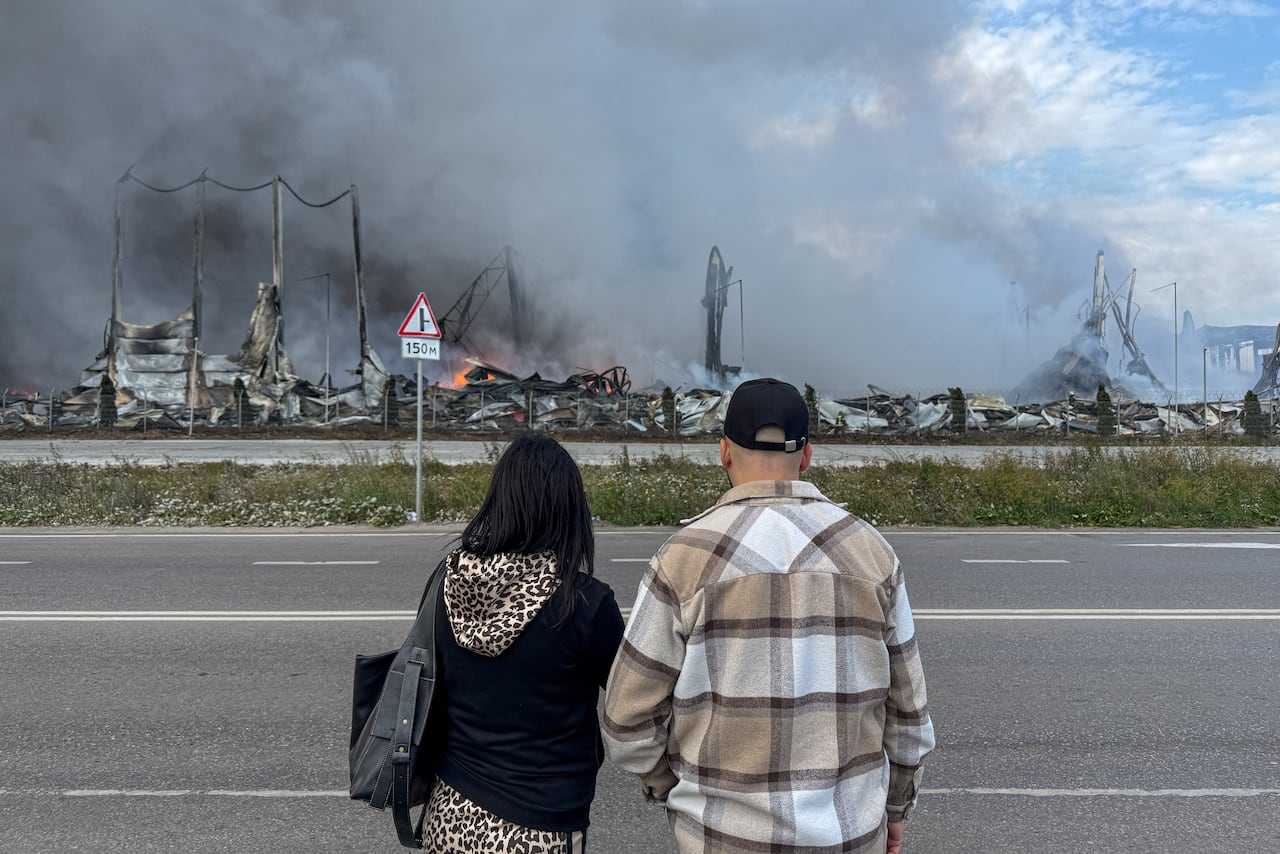
Onlookers observe burning warehouses belonging to Russia’s largest online retailer, Wildberries, following a Ukrainian drone strike in Koledino, a small village in the Moscow region, on Aug. 16. (Stringer/Reuters)
What provides him with some comfort, he said, is that his ID card indicates he is fit for military service “with restrictions.” He hopes this will suffice to keep him from being conscripted if the government initiates another mobilization.
In recent weeks, there have been rumors that Russia is gearing up for another draft. Ukrainian President Volodymyr Zelenskyy has speculated that it might occur following Russia’s parliamentary elections scheduled for Sept. 18 to 20.
The Kremlin has denied any plans for a large-scale draft, but anxiety remains, and the New York Times recently spoke with men who are preparing to leave the country as a precaution.