

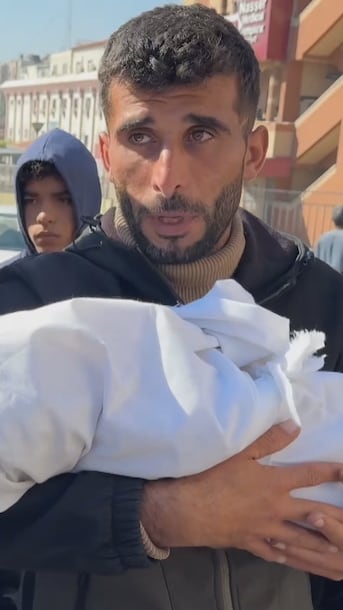
Ahmed Arqiq moved through a throng of mourners, cradling the lifeless form of his nine-month-old son, Kinan, swathed in a white blanket. With each heavy step, those around him expressed their sympathies. He softly murmured prayers over his child’s body.
The previous morning at 4 a.m., the 37-year-old recounted how he hurried his son to the Kuwait Specialty Hospital in Khan Younis, located in southern Gaza, but it was already too late.
“He was bundled up, yet his head, clothes, and pants were all drenched,” Arqiq shared with CBC News freelance videographer Mohamed El Saife, as he held up the infant’s death certificate while recalling the tragic events of the night.
Earlier in the month, torrential rains lashed parts of Gaza, resulting in flooding and damaging numerous shelters. One storm caused the collapse of a sand embankment, claiming the lives of five individuals.
For years, hundreds have been residing in makeshift tent cities, including the Arqiq family, who were forced from their home in 2023 when the conflict in Gaza erupted.
The United Nations is urging Israel to permit tent supplies into Gaza as winter approaches. It reports that the cold and rain have already resulted in fatalities among both children and adults in the area, including a nine-month-old infant who succumbed to hypothermia last week.
As the Gaza Strip experienced heavy rainfall in the week preceding the infant’s passing, many areas became inundated, leaving people trapped in several meters of water with their possessions soaked. For the Arqiq family, this meant that Kinan’s clothing and blankets were wet, preventing them from adequately drying him.
Kinan, the youngest of three siblings, tragically died from hypothermia—the first reported death from this condition in Gaza this season.
“My son perished from the cold,” Arqiq stated. “His mother attempted to breastfeed him and discovered him lifeless.”
‘He was living in very bad conditions’
Dr. Jamal Al-Hams, the medical director at the Kuwaiti Hospital, confirmed that the infant was deceased upon arrival. He noted that the baby had no prior health complications.
“The cause of death was attributed to… the severe, extremely cold weather he faced in his tent,” he explained. “He was enduring very poor living conditions.”
In winter, temperatures in Gaza can drop significantly at night, often ranging from eight to ten degrees Celsius, and occasionally falling as low as seven degrees.
In a statement released on Tuesday, Shaun Hughes, the UN World Food Programme country director for Palestine, remarked that Gaza is grappling with a “deepening” crisis regarding shelter, sanitation, and food security.
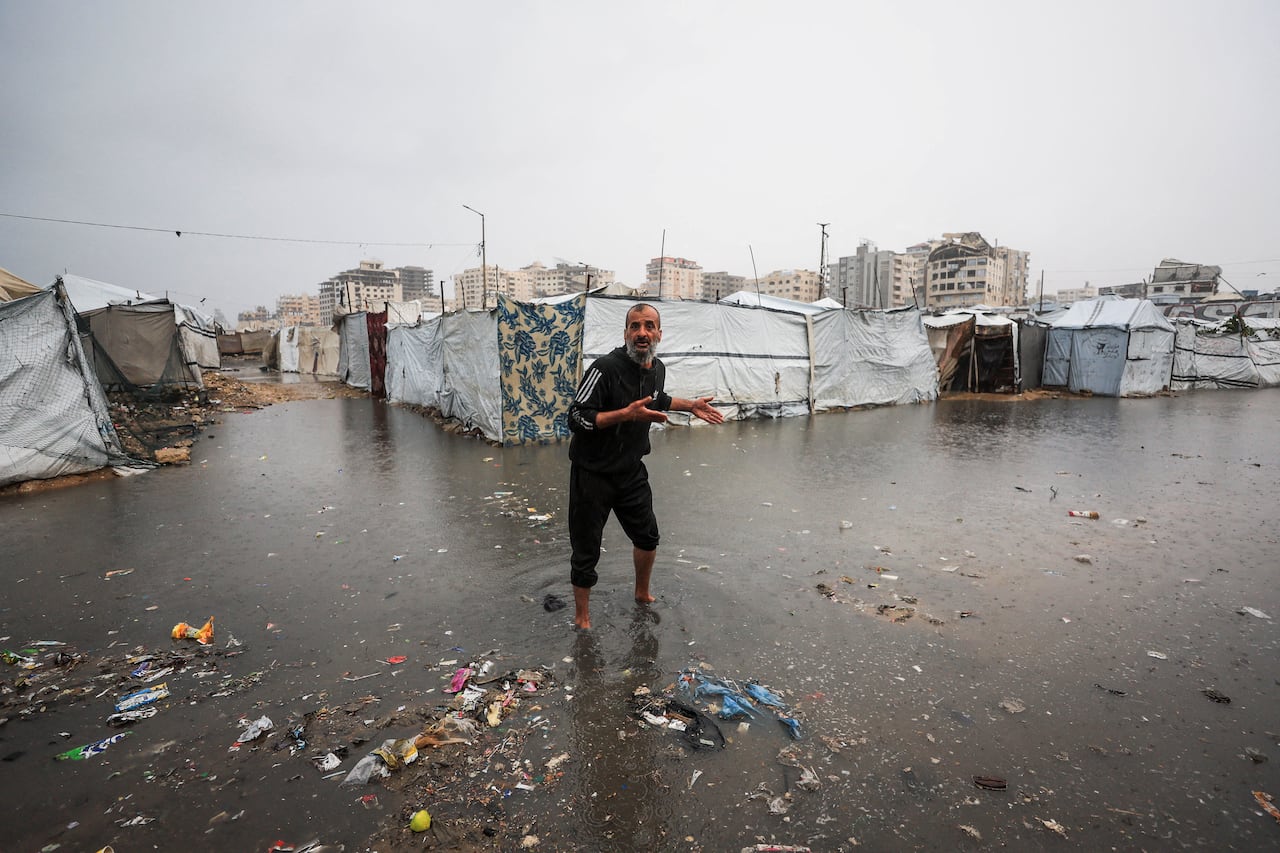
A displaced Palestinian man stands in a partially flooded tent camp during a rainy day in Gaza City on Nov. 7. (Dawoud Abu Alkas/Reuters)
“Winter rains inundate improvised shelters, ruin limited food supplies, and leave displaced families struggling to maintain warmth and nourishment,” the statement noted.
A UN report from February 2026 indicated that at least 11 children had reportedly died from hypothermia that winter, highlighting the “deadly consequences of being exposed to cold conditions without proper shelter.”
In January 2025, the UN reported that eight newborns and 74 children died from hypothermia in just the previous month.
The conflict commenced on October 7, 2023, following a Hamas-led assault on Israel that resulted in approximately 1,200 fatalities according to Israeli figures, alongside around 250 individuals taken captive. Since that time, the Gaza Health Ministry has reported over 74,000 Palestinian deaths in Gaza.
Aid still needed, orgs say
A year after the fragile ceasefire between Israel and Hamas, while the flow of aid has improved, humanitarian organizations assert that demand still surpasses supply.
“In Gaza, it does not feel like a ceasefire,” Hughes stated.
The Israeli military continues to control around 70 percent of the Gaza Strip, complicating Palestinian efforts to cultivate their own food, he explained.
“Fishing in the sea is both prohibited and perilous,” he added, due to the threat of gunfire. “Unemployment exceeds 80 percent, meaning that without humanitarian aid, many people have little to no means of survival.”
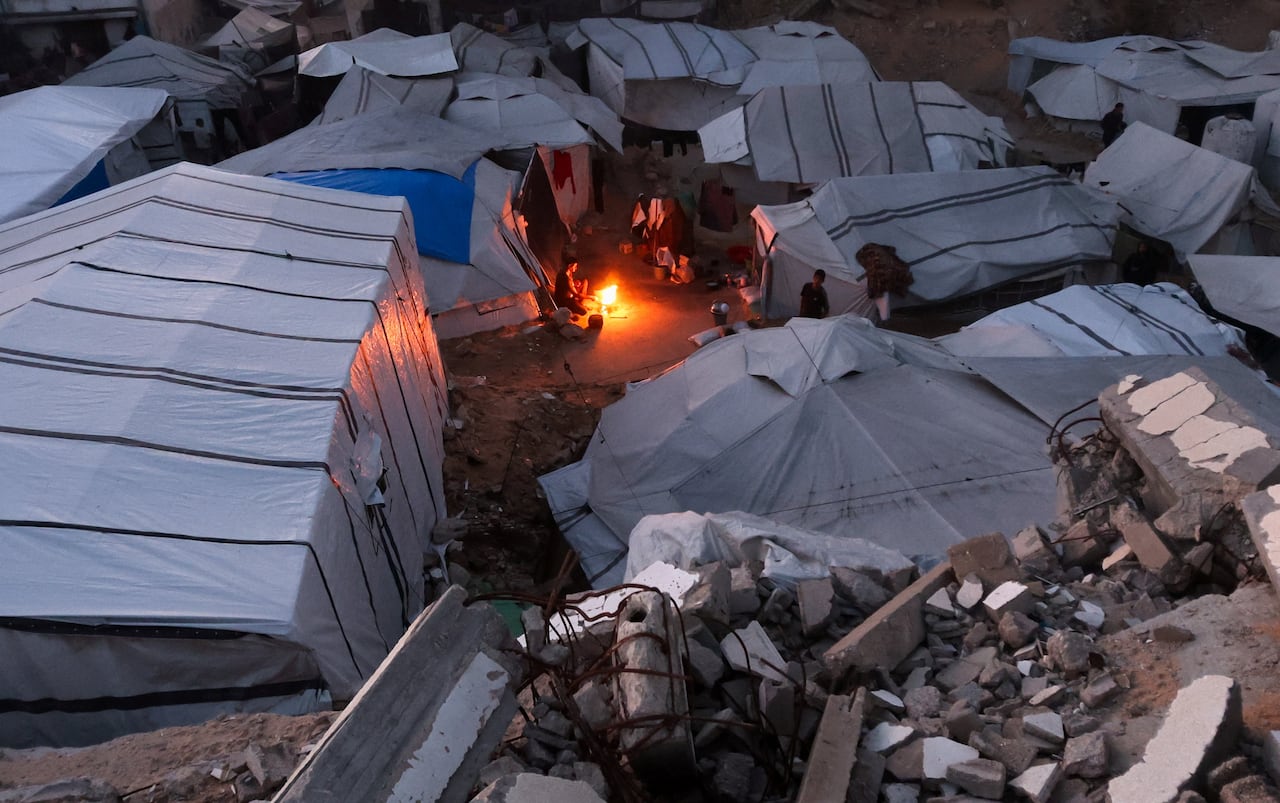
A Palestinian ignites a fire outside his tent at a camp set up inside a school in Khan Younis on Nov. 18. (Ramadan Abed/Reuters)
More than 93,000 tents and 8,600 trucks filled with winter supplies have entered Gaza as part of the Israeli military’s winterization efforts for the area, according to a post from the Co-ordination of Government Activities in the Territories shared on X last week.
However, numerous aid organizations argue that this is still insufficient.
“Without adequate shelter and essential relief supplies, hypothermia-related fatalities will continue,” warned Karl Baker, director of the UN International Organization for Migration’s Gaza program, on Tuesday, emphasizing that children are especially at risk, as they lose body heat more rapidly.
He noted that the delivery of aid has been impeded by prolonged Israeli security checks and the closure of crossing points.
“Gaza is evolving into a vast IDP camp [internally displaced persons]. It is among the worst conditions I have ever witnessed,” he remarked.
-
Woman, 3 children killed in Gaza after sand embankment collapses onto tents
-
Video
Tents housing thousands of displaced families flooded in Gaza
Afterward, at the Kuwaiti Hospital, Arqiq brought his son to the hospital courtyard where a funeral prayer took place. The small, shrouded body rested on a coat laid out on the ground in front of rows of family, friends, and onlookers who gathered to pay their respects before he was laid to rest.
“He was like a flower,” Arqiq reflected, tears streaming down his face.