

In a corner of a Staples Canada store situated north of Toronto in Richmond Hill, Mike Rinaldi finds himself immersed in a realm of childhood fantasies.
Behind the chief merchandising officer, shelves feature an array of Hot Wheels, Barbies, and dumpling-shaped squishies, accompanied by containers overflowing with plushies inspired by junk food and bouncy balls. A massive Lego spaceship looms overhead while birthday balloons float in the backdrop.
This vibrant atmosphere is made possible by Toys “R” Us Canada — the well-known toy retailer that has recently emerged from creditor protection and is now aligned with the U.S. company behind Party City, Chia Pets, and the Graceland attraction dedicated to Elvis Presley.
As part of a strategy to revive the cherished brand, Toys “R” Us and Parties “R” Us sections will be integrated into 300 Staples Canada locations by the end of the upcoming year. The store Rinaldi is visiting, located just a short drive from Staples Canada’s headquarters, is the first to undergo this transformation.
A lot is riding on this initiative for both businesses. The owner of Toys “R” Us Canada, Next Century, along with its affiliate Ad Populum, will evaluate how many customers remain loyal to the brand. At the same time, Staples Canada is aiming to showcase that it offers more than just office and school supplies or a printing service.
In essence, Rinaldi is on a mission to demonstrate that “Staples is evolving.”
The goal is to create an environment where shoppers can “accomplish multiple tasks in today’s fast-paced world,” he elaborated.
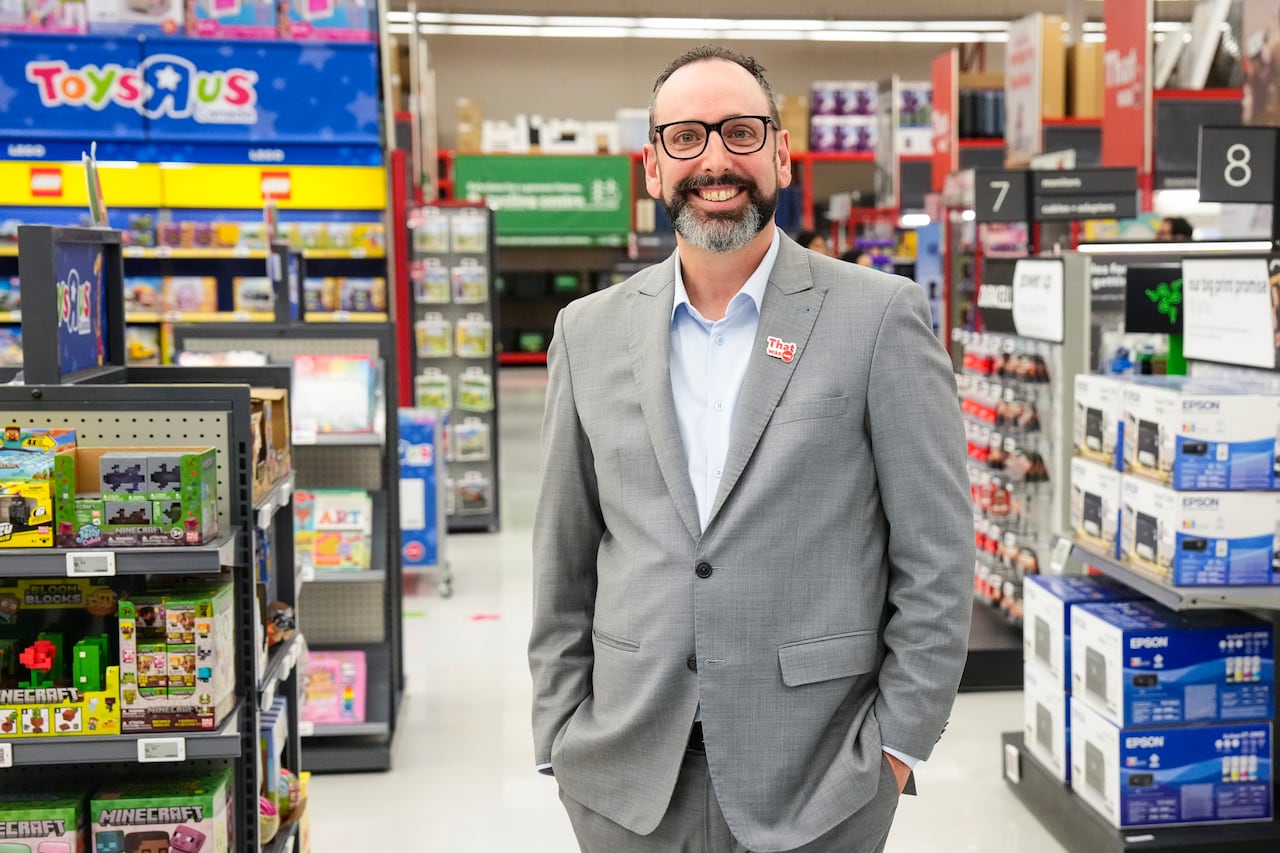
Mike Rinaldi, chief merchandise officer of Staples Canada, emphasizes that the new offerings are part of an evolving Staples brand. (Chris Young/The Canadian Press)
Reflecting this vision, several of the retailer’s locations have introduced workspaces, coffee shops, and Service Ontario branches that handle drivers’ licenses, health cards, and vehicle permits in recent years. Many outlets now also serve as drop-off points for Amazon returns, while others are expanding their travel departments to include suitcases, neck pillows, and toiletry bags.
Now, it aims to be a go-to spot for birthdays, Christmas, and other occasions when shoppers might require puzzles or piñatas.
According to Rinaldi, it was logical to utilize existing space earmarked for children’s products and events for this partnership. Staples Canada had previously sold toys with an educational focus, but the collaboration with Toys “R” Us Canada significantly broadens that selection under a brand steeped in nostalgia.
Indeed, Rinaldi beams as he reminisces about purchasing wrestling figurines from the toy chain in the 1980s, which he and his friends wrapped in newspaper to transport home during a downpour.
“The newspaper left marks on the figures, and they were ruined, but I was thrilled to have them,” he recalled.
That trip to Toys “R” Us would have occurred when the chain was just starting out in Canada, quickly becoming the ultimate destination for children’s desires.
Retailer adapting to an evolving market
However, as Walmart, Costco, and Amazon began to aggressively capture market share with lower prices, Toys “R” Us faced difficulties. By the time Ancaster, Ontario, entrepreneur Doug Putman acquired the retailer in 2021, its decline was already evident.
The previous years brought challenges such as inflation, increasing labor costs, supply chain issues, and a shift towards online shopping — all factors cited by Toys “R” Us Canada when it declared insolvency in February and subsequently sold its trademarks to Ad Populum in June.
Staples Canada has also felt the effects of these pressures.
“Its primary business — office supplies, paper, ink, and printing — has been contracting for years. Customer preferences continue to change, and the trend towards remote work has accelerated this,” remarked Liza Amlani, founder of Retail Strategy Group, in an email.
“When your main categories decline, you either reduce the size of the store or provide customers with new reasons to visit. Staples is opting for the latter approach.”
-
Toys ‘R’ Us Canada receives court approval to divide business among three buyers
-
Owner of troubled Toys ‘R’ Us Canada considers rebranding in court documents
While it may take time for shoppers to associate long-established retailers with new segments like coffee or coworking spaces, Amlani believes toys are a promising venture for Staples.
“Toys and party supplies appeal to the same parents who shop for back-to-school items at Staples,” she noted. “This extends the customer relationship and provides families with reasons to return beyond just back-to-school season.”
Additionally, the toy market can be quite profitable. Capturing a customer while their child is still young may lead to years of future toy purchases.
Nevertheless, many businesses are competing for this same demographic. Amazon, Costco, and Walmart have leveraged their high sales volumes to offer lower prices, squeezing out competitors and attracting customers.
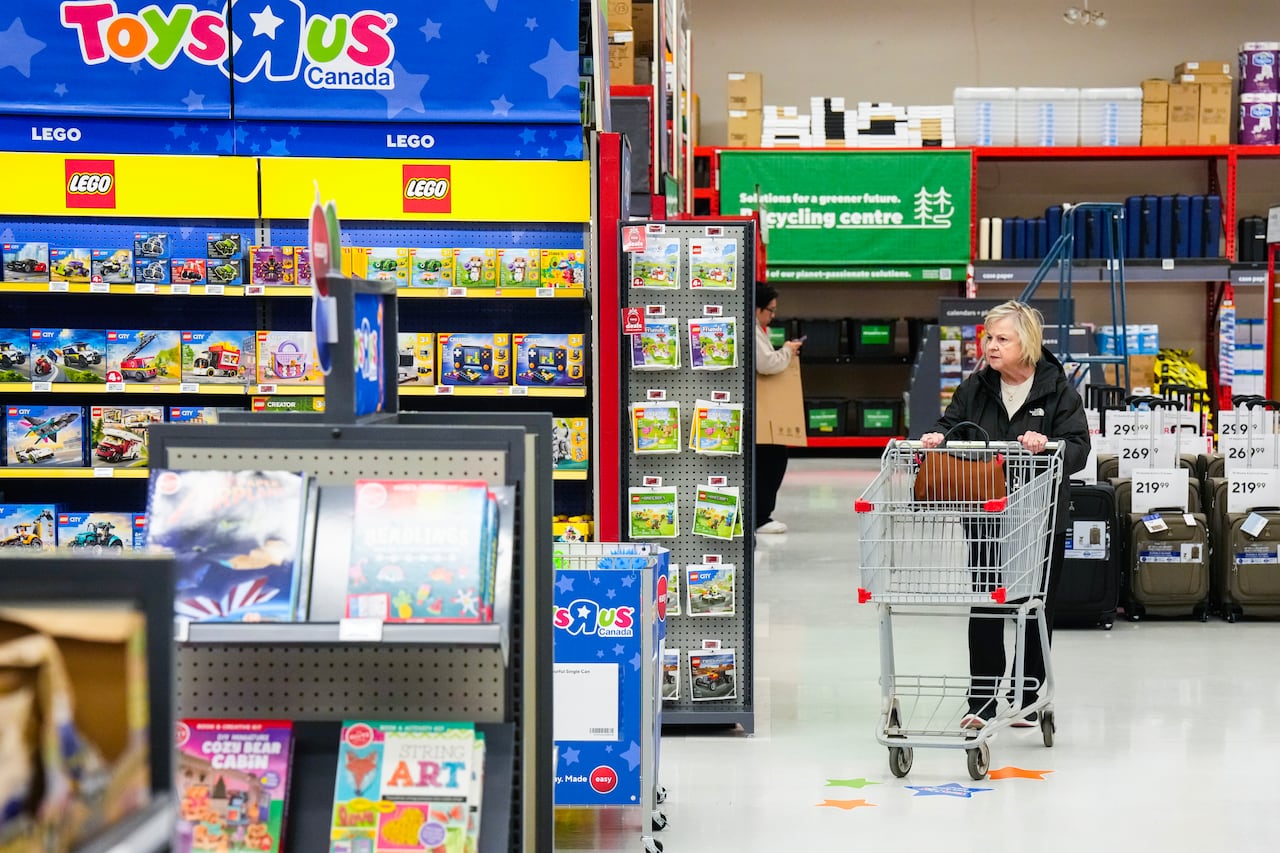
The fundamental business of Staples — office supplies, paper, ink, and printing — has been diminishing for years, according to retail consultant Liza Amlani, and adding Toys ‘R’ Us products is one strategy to counteract that. (Chris Young/The Canadian Press)
At the same time, major brands like Lego have aggressively broadened their store presence, while the trade war has motivated more Canadians to support small, local toy retailers.
Perhaps the most significant obstacle Staples will encounter is raising awareness, according to Graham Heuman, who leads retail insights at JC Williams Group.
“They will need to work diligently to inform consumers that Staples is now a place for toys through Toys ‘R’ Us,” he stated.
“Some shoppers might find the store-within-a-store concept a bit confusing if they are unfamiliar with it.”
The company has been attempting to bridge the potential awareness gap by promoting itself on social media, and the entrance to the Richmond Hill Staples features a Geoffrey the Giraffe mascot peeking through a window with a sign that reads “Toys ‘R’ Us lives here now!”
Once inside, it’s hard to overlook the vibrant signage inviting customers to the toy section, which includes areas to try out products like Magna-Tiles and Kinetic Sand.
Rinaldi shared that the chain intends to attract more visitors by organizing crafting events and playtime sessions in collaboration with brands like Lego, Ravensburger, and others.
However, during a recent Tuesday afternoon, it appeared that many shoppers were there by chance.
One woman, having visited the print center, chased after a toddler captivated by the toy section, while an older gentleman, who had previously explored the electronics area, rummaged through a bin filled with stuffed animals designed to resemble pizza boxes and ramen bowls.
Rinaldi paused to inquire of one man exiting the parcel drop-off area about his thoughts on the Toys “R” Us section.
“Are you going to put a Walmart in here?” the man questioned as he hurried toward the exit. “What’s next?”
Rinaldi could only laugh nervously.