

During the development of the initial Grand Theft Auto in the 1990s, Brian Baglow had no foresight into the monumental series it would eventually become, culminating in a highly successful sixth installment that is breaking sales records and prompting workers to take days off.
“We were figuring things out as we progressed,” Baglow, who was a writer and publicist for the 1997 release of Grand Theft Auto, shared with As It Happens host Nil KÓ§ksal.
“What we primarily faced were significant technical and financial limitations, along with a rebellious and anti-establishment attitude, which meant: If it was effective, made us laugh, and brought joy, we were content to include it.”
Fast forward thirty years, and Grand Theft Auto VI, sporting a budget exceeding $1.5 billion USD, has debuted to enthusiastic acclaim, generating an estimated $2 billion USD in first-day sales for its developer, Rockstar Games.

Set in the Florida-inspired region of Leonida, the game presents a more developed environment, narrative, and character roster, focusing on dual protagonists Jason and Lucia, a couple reminiscent of Bonnie and Clyde who delve into crime while navigating life in a satirical take on contemporary America.
Baglow remarked, “I believe they have achieved something close to a miracle. They have virtually constructed an entire U.S. state that may be more appealing to audiences than actual Florida.”
“I think it will attract a significant number of visitors from around the globe, perhaps for the coming decade.”

Vice City, Leonida, inspired by Miami, serves as the fictional backdrop for Grand Theft Auto. (Rockstar Games/Take-Two Interactive)
Origins
Grand Theft Auto, despite its American context and themes, was initially developed by a small team at DMA Design located in Dundee, Scotland.
Baglow explains that the intent was to craft a parody of the United States, viewed through an outsider’s lens.
“We didn’t begin with a written script. Instead, we started with a technology demonstration showcasing movement through a city and its buildings,” Baglow noted, now the founder and CEO of Scottish Games Network.
“I entered the project to incorporate the narrative and dialogue after the city and levels had been constructed. I drew inspiration from various crime films, heists, capers, and police dramas, selecting elements I felt would resonate with the audience.”

Brian Baglow, founder and CEO of Scottish Games Network, was a writer and publicist for the first Grand Theft Auto game in 1997. (Submitted by Brian Baglow)
The primary aim, according to Baglow, was to entertain and provoke thought.
“It was simply about what was amusing, what would elicit a laugh, and what might, at times, stir a reaction,” he explained.
Current Status
Despite the evolution it has undergone over the past 29 years, Grand Theft Auto continues to be a franchise surrounded by controversy.
Earlier versions of the game ignited moral panic surrounding violence and crime, while the latest edition has faced simultaneous accusations of misogyny and wokeness.
Baglow asserts that Grand Theft Auto has surpassed the widely discredited notion that video games lead to real-world violence. However, regarding the portrayal of women in the series, he acknowledges that “it has not been good, to say the least.”
“I am thrilled that we now have not just a female protagonist, but a Hispanic female protagonist as well. I believe this has been long overdue,” he remarked.
“It indicates a level of maturity, considering that in its early days, the team was predominantly young and male developers from Scotland.”
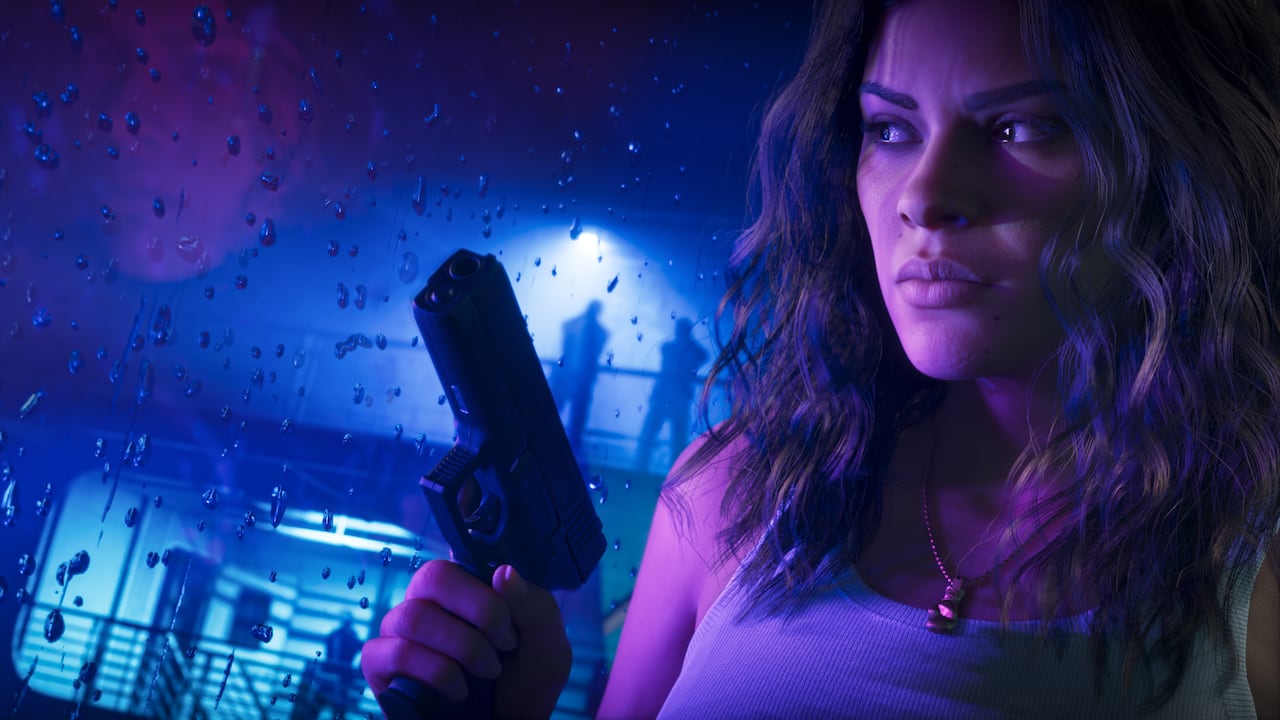
Lucia Caminos is one of the dual protagonists in Grand Theft Auto VI. (Rockstar Games/Take-Two Interactive)
Baglow suggests it is likely no accident that the early development of GTA VI coincided with the emergence of Gamergate, a movement associated with the widespread harassment of women in the gaming industry, often considered a model for the alt-right.
“I doubt that Rockstar overlooked this, so I am fairly certain that Lucia was part of their plans from early on,” he noted.
Keza MacDonald, The Guardian’s video games editor, stated that while “there remains significant sexism in GTA VI’s world, now we have Lucia to respond to it.”
“Women are no longer merely the punchline,” MacDonald observed. “This is a game where women can be as violent, visibly strong, and deeply flawed as men.”
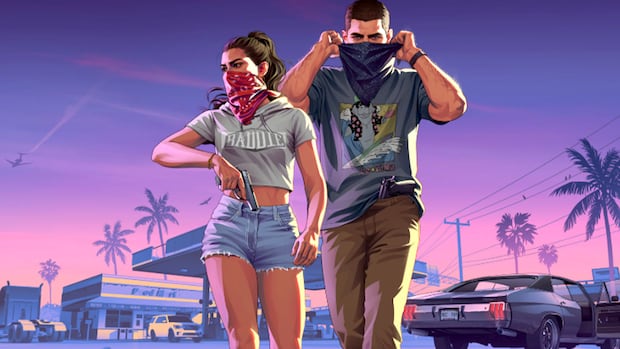
Gamers in Canada and worldwide are rejoicing as Grand Theft Auto VI finally arrives after a 13-year wait, receiving glowing reviews. The highly violent game is projected to generate billions by the end of this year.
Indeed, Lucia’s presence has fundamentally altered gameplay in the Grand Theft Auto series.
For instance, in contrast to earlier versions, players can no longer hire, kill, or rob sex workers. The developers explain that GTA VI is, unlike its forerunners, “a story about a couple in trouble, lovers on the run.”
Adapting to Change
Baglow contends that Grand Theft Auto must adapt to the evolving landscape.
“The game was never solely about controversy. You cannot maintain that stance, as it necessitates becoming increasingly extreme. You would need to go to greater lengths to evoke that reaction,” he stated.
“At some point, you need to accept that this is a world, an environment, a game where everyone should feel welcome to participate and enjoy it without feeling, as Keza mentioned, that they are the punchline.”
-
Review
Grand Theft Auto VI is a spectacular, cynical and sometimes shallow joyride through the American psyche
-
Video
Is GTA 6 a satirical masterpiece or a sandbox crime simulator?
Nevertheless, he asserts that like all titles in the Grand Theft Auto franchise, GTA VI still grants players an extraordinary degree of freedom to navigate the world as they wish.
“And if you choose to act like a psychopath, there will be repercussions. Law enforcement will pursue you, detain you, or more likely, run you down,” he quipped.
“And don’t forget, you might get devoured by an alligator. It’s fantastic.”