

If Prime Minister Mark Carney’s Liberals manage to assemble a majority in the House of Commons, it will likely be one of the most distinctive majorities in Canadian political history—formed from 166 MPs who were elected as Liberals last spring, alongside at least four floor-crossers and potentially two or three victories in byelections.
The four individuals who switched parties are already noteworthy. They have transitioned from two completely opposing parties—the Conservatives and the NDP. Until now, it might have been difficult to envision Matt Jeneroux, a Conservative elected four times in Edmonton, and Lori Idlout, who has served twice as the NDP MP for Nunavut, being part of the same party caucus.
At the very least, the perception that Carney was governing as a Progressive Conservative has become much more nuanced.
Assuming there are no additional floor-crossings—and it would be unwise to presume there won’t be more—the size of a Liberal majority currently depends on the outcomes of three byelections, two of which the Liberals are widely anticipated to win.
-
NDP’s Davies says Idlout’s decision to join Liberals overrides ‘sacred trust’ of ballot box
-
Liberals are elated while Poilievre accuses Carney of ‘backroom deals’ after NDP defection
-
NDP MP Lori Idlout crossing floor to Liberals, bringing Carney closer to majority
Winning in University-Rosedale and Scarborough Southwest—two Toronto ridings that the Liberals secured with ease less than a year ago—would elevate the Liberal count to 172 seats. This would provide the government with a stronger assurance of surviving any confidence votes in the House.
A victory in Terrebonne—where an unusual judicial annulment has led to a byelection—would increase the Liberal count to 173 seats. At this stage, the Liberals could gain majority control over House committees, allowing for a more straightforward approach to advancing legislation without the need for compromises with opposing parties.
The implications of Idlout’s decision are significant and multi-faceted.
NDP dwindles further, Poilievre remains patient
This development represents yet another setback for the NDP, which has already experienced a historic decline following last year’s election.
Fifteen years prior, the NDP achieved a remarkable 103 seats, marking a significant breakthrough for a party traditionally in third place. The next leader—set to be elected at the end of this month—will take over a caucus consisting of at most six MPs. If Alexandre Boulerice indeed transitions to provincial politics in Quebec, the NDP’s representation will shrink to five MPs.
For the Conservatives, Idlout’s shift provides another opportunity to reiterate their claim of potential wrongdoing.
Conservative Leader Pierre Poilievre contended in a social media post, “Mark Carney is utilizing backroom deals to secure a costly majority that voters have rejected.”
Whether there is a morally questionable way to achieve a majority in the House of Commons is a topic that invites endless debate. However, if, as polls indicate, the Liberals have opened up a considerable lead over the Conservatives, the latter might not be overly concerned about the possibility of a federal election occurring imminently.
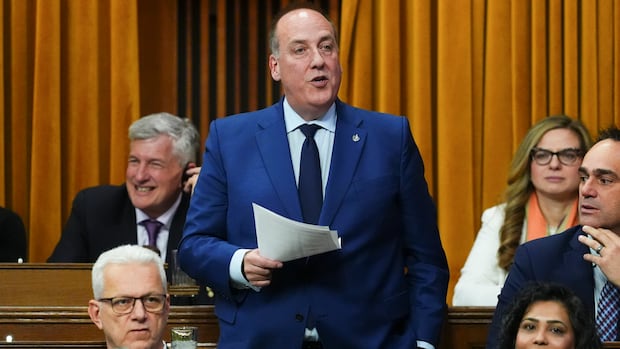
Liberal MP Chris d’Entremont â the first MP to join this government from the Conservatives in November â said he reached out to support Nunavut MP Lori Idlout when she crossed the floor to the Liberals from the NDP Tuesday night.
Recently, Poilievre’s Conservatives have appeared eager to be perceived as working collaboratively with the Liberals. However, in a hung Parliament—where no single party holds a majority—such cooperation can be essential, especially for those wanting to avoid an election. In a majority environment, opposition parties are much freer to oppose without facing repercussions.
Should the dynamics shift, will the Conservative opposition’s attitude also change?
This latest floor-crossing does not directly reflect on Poilievre’s leadership. However, it remains to be seen how his leadership will endure over the next three years in opposition.
What would Carney pursue with a majority?
Should Carney achieve a majority, what would his subsequent actions be? Would he feel compelled to pursue a more ambitious agenda?
For the Liberals, there appears to be no clear downside to accepting Idlout into their ranks. However, there is likely some danger of becoming overly triumphant.
The last instance of a governing party transitioning from minority to majority occurred with Stephen Harper’s Conservatives in 2011. After five years of operating under a minority government—against a backdrop of global turmoil—Harper emphasized the necessity for a “strong, stable, national majority government.”

The NDP only have six seats in Parliament after Nunavut MP Lori Idlout said she was crossing the floor to join the Liberal Party, putting Prime Minister Mark Carney’s government two seats short of a majority. Interim NDP leader Don Davies said MPs should ‘go back to the voters’ if they want to change parties.
He achieved his objective. Following a period of pragmatic governance during the first half of his premiership, Harper adopted a bolder approach with a majority—implementing changes such as the age eligibility for Old Age Security and revising environmental regulations, among other initiatives—drawing considerable criticism along the way.
Four years after securing a majority, Harper lost power entirely—replaced by a Liberal majority.
It remains uncertain whether Harper could have avoided defeat with a more cautious governing style; nonetheless, the Liberals may have reason to exercise caution against overreach or hubris if they manage to escape the confines of minority governance. Voters may not be overly concerned with how Carney secures his majority, but they will likely care about what he does with it.
If the Liberals attain a slim majority, any remaining leverage in the House of Commons might shift toward the Liberal backbench—a backbench that has demonstrated varying degrees of independent thought. If the Liberals find themselves at 173 or 174 seats, just a couple of dissenting backbenchers could jeopardize government legislation.
This type of majority would also be susceptible to personal choices and events that frequently cause resignations and byelections during a Parliament’s term.
Achieving a majority would represent a monumental accomplishment for Carney and the Liberals, especially considering that just 16 months ago, he was a private citizen and the Liberals were trailing the Conservatives by 20 points in the polls.
However, reaching a majority would not signify the conclusion of the story; rather, it would mark the beginning of an intriguing new chapter.