

The United States has officially lost its measles elimination status after experiencing a devastating year of outbreaks, marking the end of a quarter-century distinction.
During a media briefing on Tuesday, the Pan American Health Organization (PAHO), a branch of the World Health Organization, revealed this update, which follows the deadliest year for measles in the U.S. since 1991. This year, the U.S. has reported ten deaths linked to measles so far, with the U.S. Centers for Disease Control and Prevention confirming over 5,400 cases.
Mexico has also lost its measles elimination status, due to a resurgence of the virus, including a significant outbreak in the state of Chihuahua. Bolivia has similarly lost its status.
This marks another setback for measles prevention across the Americas, a region that once led the elimination efforts. This development follows Canada’s loss of its measles elimination status, a distinction it held for 28 years.
Health experts had been anticipating the U.S. announcement for several months.
Jennifer Nuzzo, a professor of epidemiology and director of the Pandemic Center at the Brown University School of Public Health, stated, “The decision to remove the United States’ measles elimination status is unfortunately not unexpected, considering the level of measles transmission we’ve seen over the past nearly two years.”
She added, “Losing our status indicates we are regressing. It’s a loss of reputation and stature on the global stage, and it negatively impacts public health, as measles is a severe disease.”
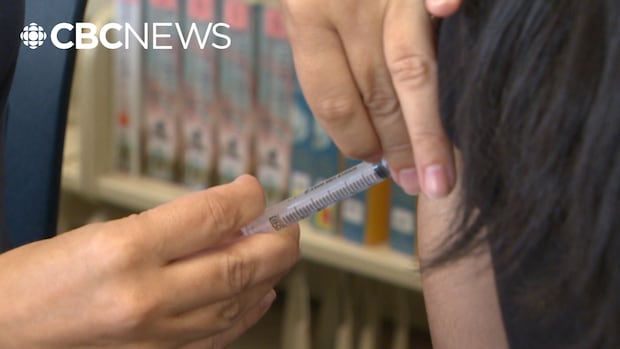
A CBC News analysis shows childhood vaccination rates appear to be declining in B.C. The trend comes as a measles outbreak makes its way through northern B.C. The CBC’s Jon Hernandez takes a closer look at the numbers.
Measles is an extremely contagious virus that transmits through the air when an infected individual breathes, coughs, or sneezes, posing the greatest risk to young children. It can lead to flu-like symptoms, but also serious complications such as pneumonia, encephalitis, blindness, and even death, as per WHO guidelines.
Additionally, it has been noted to cause rare neurological complications and long-term health issues for survivors, along with severe consequences for pregnant individuals.
Since the introduction of the measles, mumps, and rubella (MMR) vaccine for children in the 1970s, public health organizations have effectively managed the virus.
However, vaccination rates began to decline following the COVID-19 pandemic, leading to an increase in measles transmission in both the U.S. and Canada.
-
Confirmed measles case in Durham region: unimmunized child with history of recent international travel
-
Bangladesh in grips of world’s worst measles outbreak, with 1,000 dead in last 6 months
-
Vaccine-preventable illnesses on the horizon again as Canadian kids head back to school
Alon Vaisman, an infection control physician at the University Health Network, remarked to CBC News, “This is the culmination of a trend that has been developing for several years with decreasing vaccination rates.”
He pointed out that the pandemic intensified anti-vaccine sentiments, allowing misinformation regarding long-established vaccines, including the MMR vaccine, to spread.
“We understand the measures required for measles elimination. The vaccine is highly effective. The key lies in educating the public and ensuring access to vaccinations.”
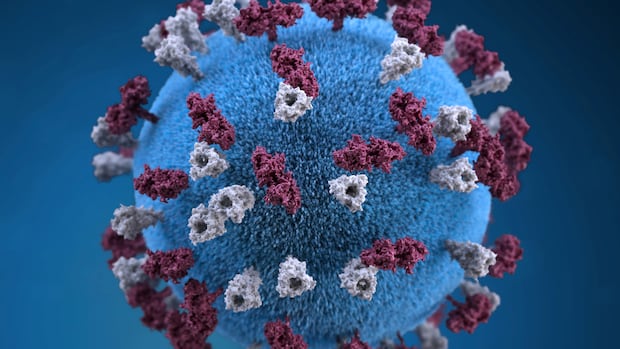
Canada has lost its measles elimination status after a sustained outbreak of the disease that’s lasted more than a year, leading to more than 5,000 infections and the death of two babies.
Critics have pointed to changes in public health policy during Donald Trump’s presidency as factors contributing to the measles crisis in the U.S.
Robert F. Kennedy Jr., U.S. Health Secretary and an anti-vaccine advocate with no formal medical qualifications, was a prominent figure in the movement before his appointment to oversee federal health agencies by Trump.
Kennedy and other officials have asserted that vaccination rates had been declining for years prior to Trump’s second term, that measles is not uniquely an “American phenomenon,” and that the U.S. is managing measles outbreaks better than other nations.
Earlier this year, a CDC representative informed reporters that losing the nation’s elimination status would be viewed as the “cost of doing business” on a global scale.
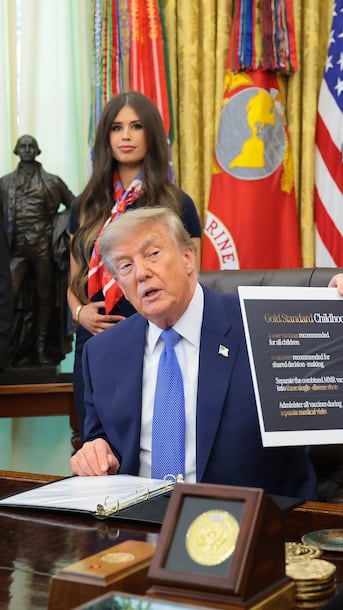
U.S. President Donald Trump signed an executive order calling for fewer childhood vaccinations by limiting the inoculation schedule from 18 to 11 immunizations. The order also recommended splitting the childhood measles, mumps and rubella vaccine into three shots and delivering the shots at separate medical visits. Public health experts say the current U.S. schedule reflects decades of evidence and that fewer recommended shots will leave more children exposed to preventable diseases.
To regain elimination status, endemic transmission of measles must be halted in a region for at least 12 consecutive months.
Canada was first acknowledged for eliminating endemic measles transmission in 1998. For twenty years, outbreaks were infrequent and quickly contained. However, in 2024, amid rising cases, Canada recorded its first measles-related death in decades. Since the onset of that outbreak, which has affected multiple provinces, over 6,400 measles cases have been documented, including more than a thousand in 2026.
There is a glimmer of hope for Canada. The Public Health Agency of Canada announced in late October that there had been no cases linked to the current measles outbreak for over two months.
Dr. Jarbas Barbosa, director of PAHO, stated in Tuesday’s briefing, “The encouraging news is that Canada has already reached a significant milestone.” He emphasized that Canada possesses a “robust surveillance system,” and that it is now essential to maintain low transmission rates for a year.
Tag: rewrite-pending