

Outdoor skating rinks are expected to face a tough winter as a super El Niño phenomenon is projected to bring milder temperatures this season.
According to Robert McLeman, an environmental studies professor at Wilfrid Laurier University, the conditions this winter may mirror those experienced during the 2015-2016 winter season, which coincided with the last El Niño event.
“Temperatures fluctuated, and we had a notably late winter onset; it was a green Christmas, and it didn’t get cold until mid-January,” he mentioned in an interview with CBC News.
“I anticipate a repeat of that scenario this winter. For those managing skating rinks, it will likely be quite frustrating to establish a quality rink and maintain it throughout the season,” McLeman stated.
El Niño is a natural climate cycle that influences global weather patterns. It occurs when the ocean water in the central and eastern Pacific Ocean becomes warmer than average, as explained by Statistics Canada.
Earlier predictions this year indicated that we could experience one of the most intense El Niño events on record, which is anticipated to reach its peak around December.
McLeman also oversees RinkWatch, a citizen science initiative aimed at gauging the impact of climate change on outdoor rinks. He noted that a solid foundation for outdoor rinks requires several days of consistent cold weather, ideally below -5°C, to allow water layers to freeze properly.
“You need to apply thin layers of water and build it up gradually, and since the ground is rarely perfectly level, achieving a uniform surface necessitates multiple flooding sessions,” he explained.
Temperature swings can lead to melting rinks, along with the occurrence of precipitation such as freezing rain and heavy snow.
“This creates significant challenges for outdoor rink creators, as it disrupts the smooth surface, requiring continual rebuilding,” McLeman elaborated.
‘We have to roll with the punches’
The City of Kitchener is not deterred by the forecast of a warmer winter and is actively preparing the outdoor rink at Victoria Park. Staff have begun erecting the boards for two expansive ice pads, each measuring 80 feet by 170 feet, or 24 meters by 51 meters.
“Our preparation process remains unchanged; we want to ensure we’re ready to utilize any cold temperatures that do arise,” said Rob Jacob, the assistant supervisor of horticulture, in a conversation with CBC News.
Jacob emphasized that they ideally require two weeks of steady cold weather to form the rinks, which are constructed on a snow base that is flooded 20 to 30 times. However, he maintains a realistic perspective on the situation.
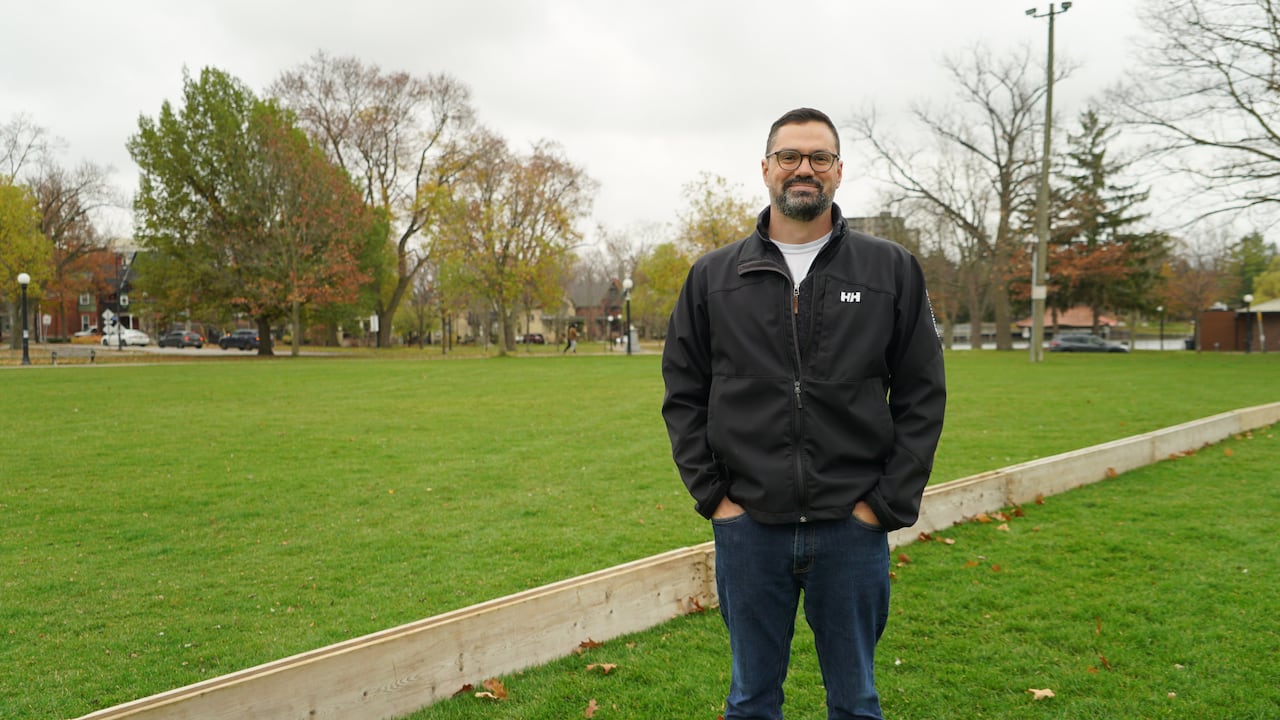
Rob Jacob is the assistant supervisor of horticulture with the City of Kitchener. He stands in front of what will become two large ice pads for people to skate on in the winter. (Carmen Groleau/CBC)
“We experienced an unusually warm fall, and even the forecast for the next two weeks shows a few nights dipping below freezing; we expect this trend to continue into the new year,” he added, noting that ideal temperatures often do not manifest until January.
Jacob mentioned that if favorable conditions arise, the city has the personnel and resources ready to prepare the rinks promptly.
However, if such conditions are not consistently met this winter, residents may have to visit the outdoor rink located at city hall.
“As Canadians, dealing with an outdoor ice rink means we have to adapt to the circumstances. Fortunately, we have been able to offer a rink for several months in recent years. But if we miss that opportunity, we will pack up and look forward to a colder winter next year,” he remarked.
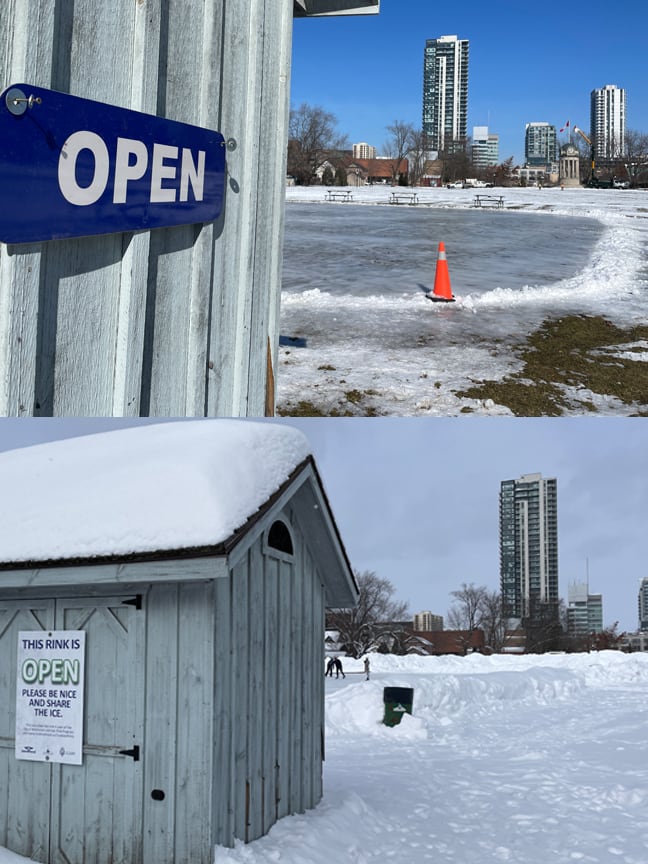
Two photos, two very different winters. The top photo shows Feb. 20, 2024 in Kitchener’s Victoria Park. The bottom photo was taken on Feb. 20, 2025. (Kate Bueckert/CBC)
Warmer climate puts future of rinks at risk
With the super El Niño affecting this winter’s weather, McLeman mentioned that RinkWatch is aiming to enlist new volunteers to gather data that can help analyze past and future skating seasons.
The outlook for the future appears challenging.
“For instance, in the 2060s and 2070s, the Waterloo region will likely face significant difficulties in creating outdoor skating rinks during most winters, as our average temperatures will rise to a level where we seldom experience those cold -5°C or -10°C days,” he warned.
This trend could have lasting implications for public health and the future of winter sports, McLeman cautioned.
“One consequence I foresee in this warming climate is that a reduction in outdoor rinks will lead to decreased participation in organized hockey and figure skating, which could have long-lasting effects on amateur sports, professional leagues, and also the physical fitness and well-being of our children,” he concluded.