

On Wednesday, the administration of U.S. President Donald Trump initiated a trade investigation focusing on surplus industrial capacity in 16 key trading nations. This action aims to restore tariff pressure following the U.S. Supreme Court’s recent decision that dismantled a crucial aspect of Trump’s trade strategy last month.
Canada is not included as a target in this new investigation.
Jamieson Greer, the U.S. Trade Representative, stated that the Section 301 investigation into unfair trade practices could result in new tariffs being imposed on China, the European Union, India, Japan, Mexico, and South Korea by the summer.
Other nations under investigation for excess capacity include Taiwan, Vietnam, Thailand, Malaysia, Cambodia, Singapore, Indonesia, Bangladesh, Switzerland, and Norway.
Trump and his administration have expressed their intent to recover the hundreds of billions in revenue lost after the Supreme Court’s ruling in February, which ruled that the president’s use of emergency powers to impose tariffs was illegitimate, by employing alternative laws to implement new tariffs.
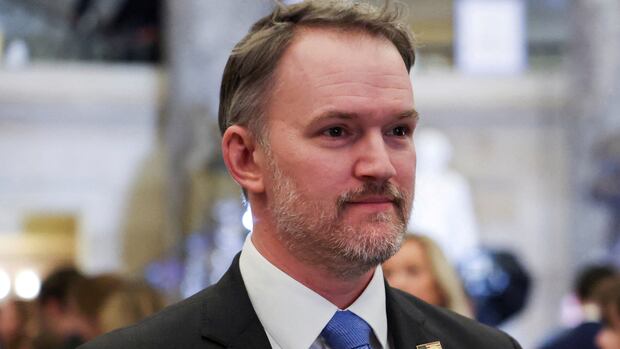
U.S. trade envoy Jamieson Greer indicates that Canada must accept increased tariffs as part of any trade negotiation with the Trump administration, including a potential extension of the Canada-U.S.-Mexico Agreement (CUSMA).
The administration is initiating investigations under Section 301 of the Trade Act of 1974, which may ultimately result in new import tariffs.
However, during a call with reporters on Wednesday, Greer mentioned that he did not want to make assumptions about the investigation’s outcome.
“The policy remains unchanged — the methods may vary depending on various factors such as court decisions and other circumstances,” Greer noted, emphasizing the objective of safeguarding American jobs.
Return of tariff drama
The initiation of efforts to replace Trump’s earlier tariffs might rekindle the contentious issues that troubled the global economy last year.
The tariffs that were later revoked led to the establishment of new agreements with U.S. trading partners — the implications of new import tariffs on these agreements remain uncertain.
-
Video
Trump issues new 10% global tariff after ‘Liberation Day’ tariffs struck down
-
Companies line up for refunds after U.S. Supreme Court strikes down Trump’s tariffs
Greer asserted that the new investigations, which have been anticipated by administration officials, should not surprise trading partners, and they ought to adhere to their agreements, although he refrained from stating that this would shield them from all new Section 301 tariffs.
He mentioned that Trump is committed to pursuing tariffs and “will discover a means to address unfair trading practices. He’ll find a way to reduce our trade deficit. He’ll find a way to safeguard U.S. manufacturing. We possess numerous tools to achieve it,” Greer asserted.

Following the U.S. Supreme Court’s ruling that President Donald Trump’s IEEPA tariffs were unlawful last week, a significant amount of refunds are now on the table. However, the ruling does not provide a clear process for obtaining those refunds, which still need confirmation from the White House. Flexport, an American AI-driven logistics firm, introduced a tariff refund calculator to help companies estimate their potential refunds. CEO Ryan Petersen discusses the rationale behind creating this tool on Power & Politics.
Range of investigations planned
The administration is investigating what it considers ongoing trade surpluses and related policies such as subsidies and wage suppression, among other variables.
Additionally, the administration is launching a Section 301 investigation aimed at prohibiting the importation of goods produced through forced labor.
Greer indicated that further Section 301 investigations could arise regarding issues like digital service taxes, pharmaceutical pricing, and ocean pollution, among other topics. The U.S. Commerce Department is conducting separate investigations under Section 232 of the 1962 Trade Expansion Act.
There are time constraints to conclude these investigations.
The administration has enacted 10 percent tariffs on imported goods through Section 122 of the 1974 Trade Act, but these are set to expire on July 24. Trump has mentioned plans to increase this import tax to 15 percent, but this has yet to be implemented.
EU, Asian countries point to deals struck with U.S.
On Thursday, Bernd Lange, chair of the European Parliament’s trade committee, remarked that the initiation of new Section 301 investigations into unfair trade practices by Washington was anticipated, but “any deviation in substance from the Turnberry Deal will not be tolerated.”
The European Parliament is still considering when to vote on the proposed trade agreement reached last summer between the U.S. and EU in Turnberry, Scotland.
On Thursday, China labeled the U.S. assertion of overcapacity as a “false proposition,” opposing “political manipulation under this guise.” A spokesperson for the Foreign Ministry, Guo Jiakun, expressed China’s opposition to all unilateral tariff actions.
Taiwan’s government stated that the reciprocal trade agreement signed with the U.S. last month established a consensus on various issues potentially relevant to the Section 301 investigation. Similarly, Indonesia affirmed that its agreement with the U.S. continues to be the primary guideline for bilateral trade relations.