


A strategy has been devised by researchers to prevent a significant satellite from descending towards its premature destruction.
The Neil Gehrels Swift Observatory of NASA, dedicated to studying gamma-ray bursts, is accelerating its descent towards Earth at a faster pace than projected. Initially expected to survive until 2030, the satellite is now on track to disintegrate in the Earth’s atmosphere by the year’s end.
To counter this, NASA has collaborated with the private company Katalyst Space to create a robotic spacecraft that will push Swift back into a higher orbit, potentially prolonging its operational lifespan by ten to twenty years.
Brad Cenko, the principal investigator of Swift, mentioned that NASA would typically plan a mission of this scale meticulously over several decades. However, due to the urgency posed by Swift’s situation, this plan was swiftly assembled within approximately a year and a half.
“This project deviates significantly from NASA’s usual operations,” Cenko informed host Nil Köksal of As It Happens. “Consequently, there is a real risk that it may not succeed.”
An aircraft, a rocket, and 3 robotic appendages
In early 2025, NASA discovered that Swift was gravitating towards Earth’s orbit at an unexpectedly accelerated rate, attributed to a sudden surge in solar activity.
This surge in activity has also coincided with the heightened visibility of the Northern Lights.
“While the Northern Lights are a sight to behold, each occurrence signals a faster decline of our satellite,” expressed Cenko.
When Swift was initially launched in 2004, it orbited at an altitude of 600 kilometers above sea level. Presently, it has descended to approximately 360 kilometers.
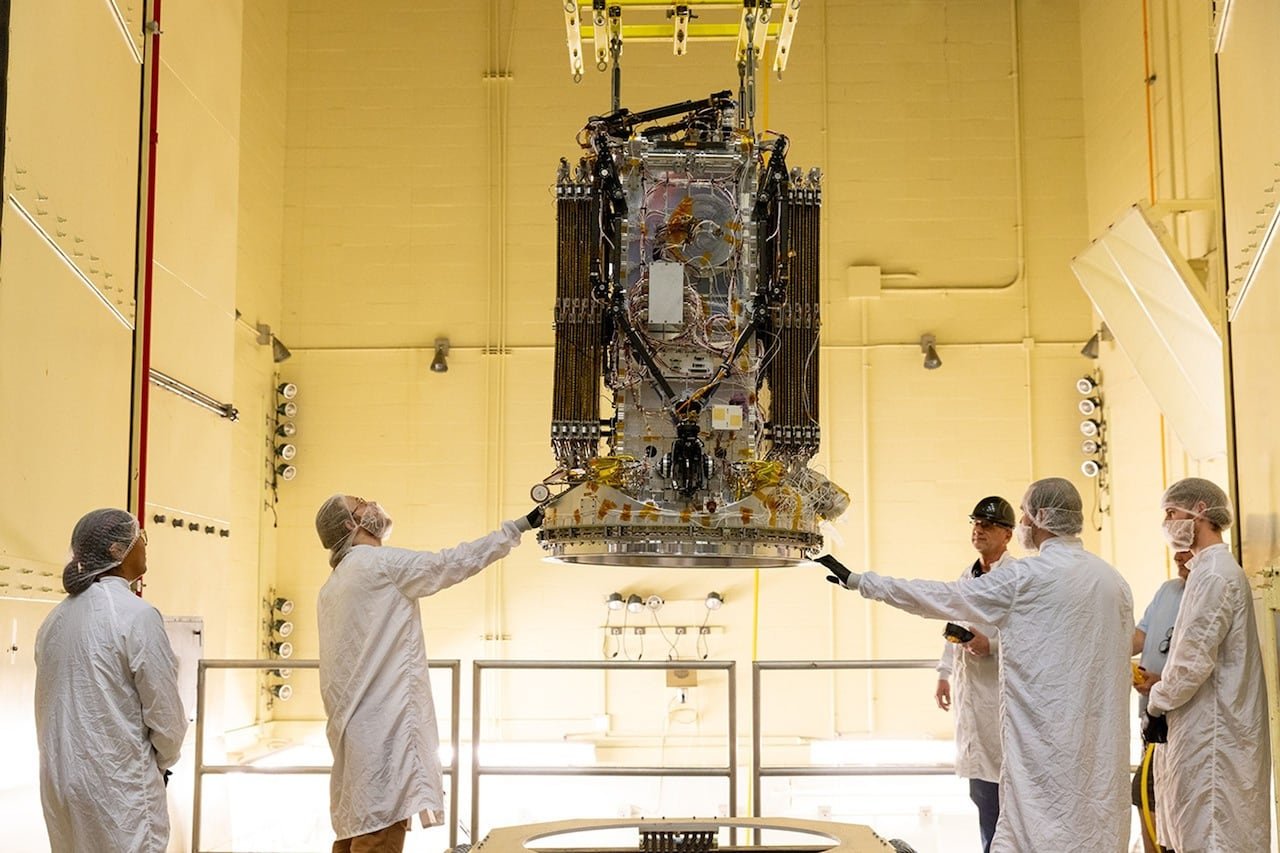
Thus, NASA enlisted the services of Katalyst, based in Arkansas, to construct a solution capable of reaching Swift in time to avert its demise.
The outcome is LINK, a robotic spacecraft designed to engage with Swift. This posed a challenge as Swift was never intended for in-space maintenance activities.
LINK is housed within a rocket named Pegasus XL, which, in turn, is attached to the underside of a modified L-1011 airplane known as Stargazer.
Later this month, Stargazer will depart from Kwajalein Atoll in the Republic of the Marshall Islands in the South Pacific Ocean. If all proceeds as planned, the aircraft will release the rocket, propelling it into the atmosphere to intercept the satellite.
Subsequently, LINK will use its lobster-like claws on its three robotic arms to grasp Swift and provide the necessary push, as explained by Cenko.
The entire operation is anticipated to span around two months.
The future of in-space maintenance
If the Swift boosting mission proves successful, it will mark a crucial advancement in the realm of in-space servicing, assembly, and manufacturing, according to Mason Peck, a mechanical and aerospace engineering professor at Cornell