

The Pasadena Days-Humber Valley Strawberry Festival in Pasadena this year featured a unique and mesmerizing concert experience as swarms of spruce budworm moths descended upon the event. Performer Vanessa Newman, a member of the Merrymaker band from Corner Brook, described the scene as resembling a snowstorm due to the sheer number of moths. During her performance, she discovered a moth in her water, but despite the inconvenience, she marveled at the spectacle.
The moths swirled around lights like flocks of starlings, covering a white tent and invading the performers’ space. Despite the challenges of moths landing on their instruments and faces, the band members managed to maintain their concentration and deliver a memorable performance to an enthusiastic audience.

While the moth infestation posed challenges for the performers, Newman acknowledged the beauty of the natural phenomenon. She expressed awe at the sight, emphasizing that it was a unique experience for her.
An Unforgettable Evening
The sudden influx of spruce budworm moths in Pasadena marked a significant moment in the insects’ lifecycle. These moths typically live for about two weeks after reaching adulthood, with peak activity observed from mid-July to August.
The substantial presence of moths in Pasadena reflects an anticipated spruce budworm outbreak that has been overdue for a few years, according to Parks Canada. The province is currently grappling with the escalating infestation, which is expected to persist for several years. The impact of the outbreak on trees is yet to be fully assessed, but the devastation caused by spruce budworms, particularly as caterpillars, is well-documented.
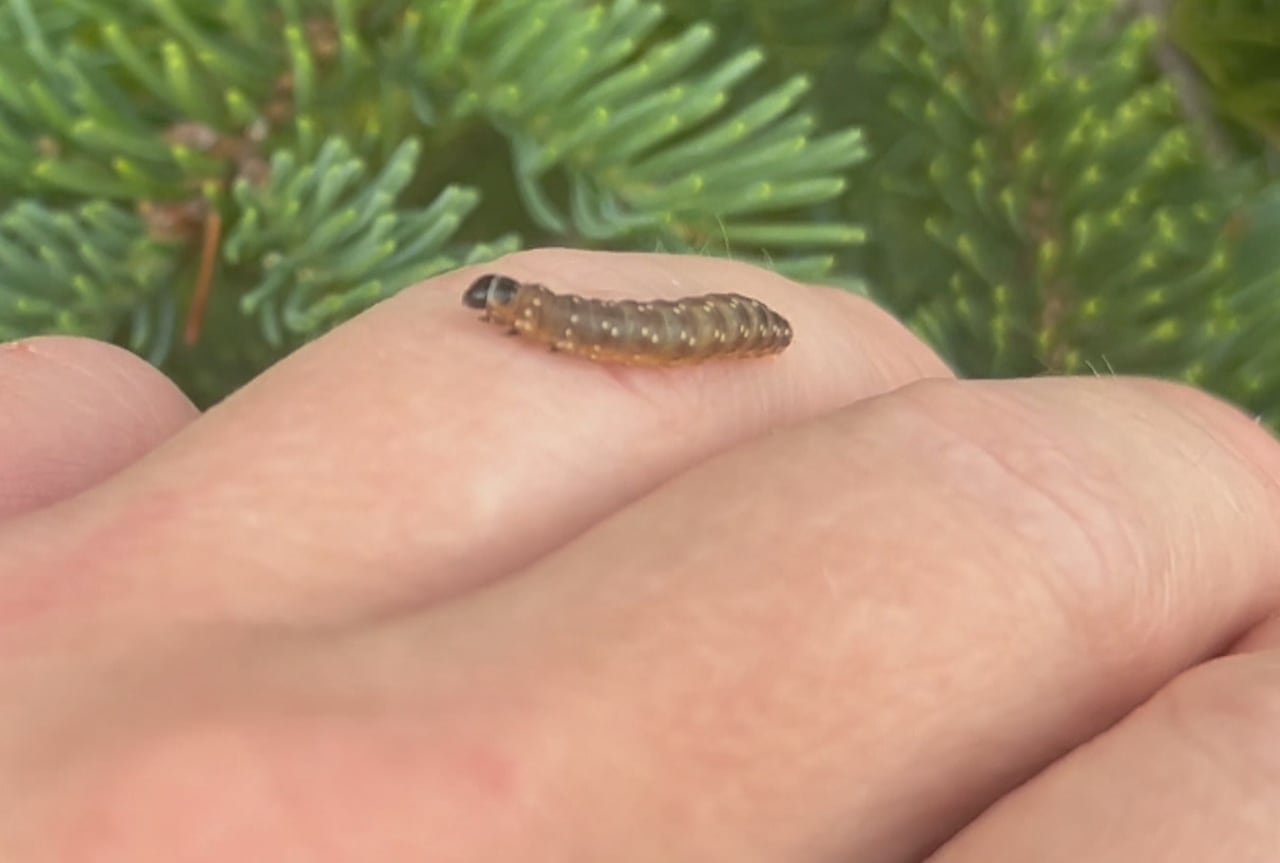
The economic repercussions of spruce budworm outbreaks are significant, with past incidents resulting in the loss of substantial timber resources in Newfoundland and Labrador. Moreover, the presence of dead wood from infested trees poses safety risks and increases the likelihood of wildfires in forested areas.
As the current outbreak unfolds, provincial forestry management strategies are being adjusted to mitigate the impact on forest ecosystems and safeguard valuable timber resources.
Anticipating the Future
Lloyd Hollett, owner of the Newfoundland Insectarium, expressed astonishment at the scale of the spruce budworm infestation, extending beyond the Humber Valley region. He highlighted the cyclical nature of these outbreaks and emphasized the need for natural factors to regulate moth populations.

Although concerned about the implications for future infestations, Hollett noted a recent decline in moth numbers in his area. He highlighted the role of natural conditions, such as temperature fluctuations, in controlling spruce budworm populations.
The provincial Department of Forestry, Agriculture, and Lands confirmed the absence of a spruce budworm spraying program this year. Instead, the focus has shifted towards targeted forest protection measures to preserve tree health and mitigate the ongoing outbreak.
The department is closely monitoring moth populations and tree conditions to determine the necessity of future intervention strategies. The evolving situation underscores the importance of adaptive forestry practices in combating insect inf